
The Vibe Coding
Revolution
Are you ready for the reality behind the hype? Discover how we bridge the gap between AI-driven prototypes and production-grade excellence.
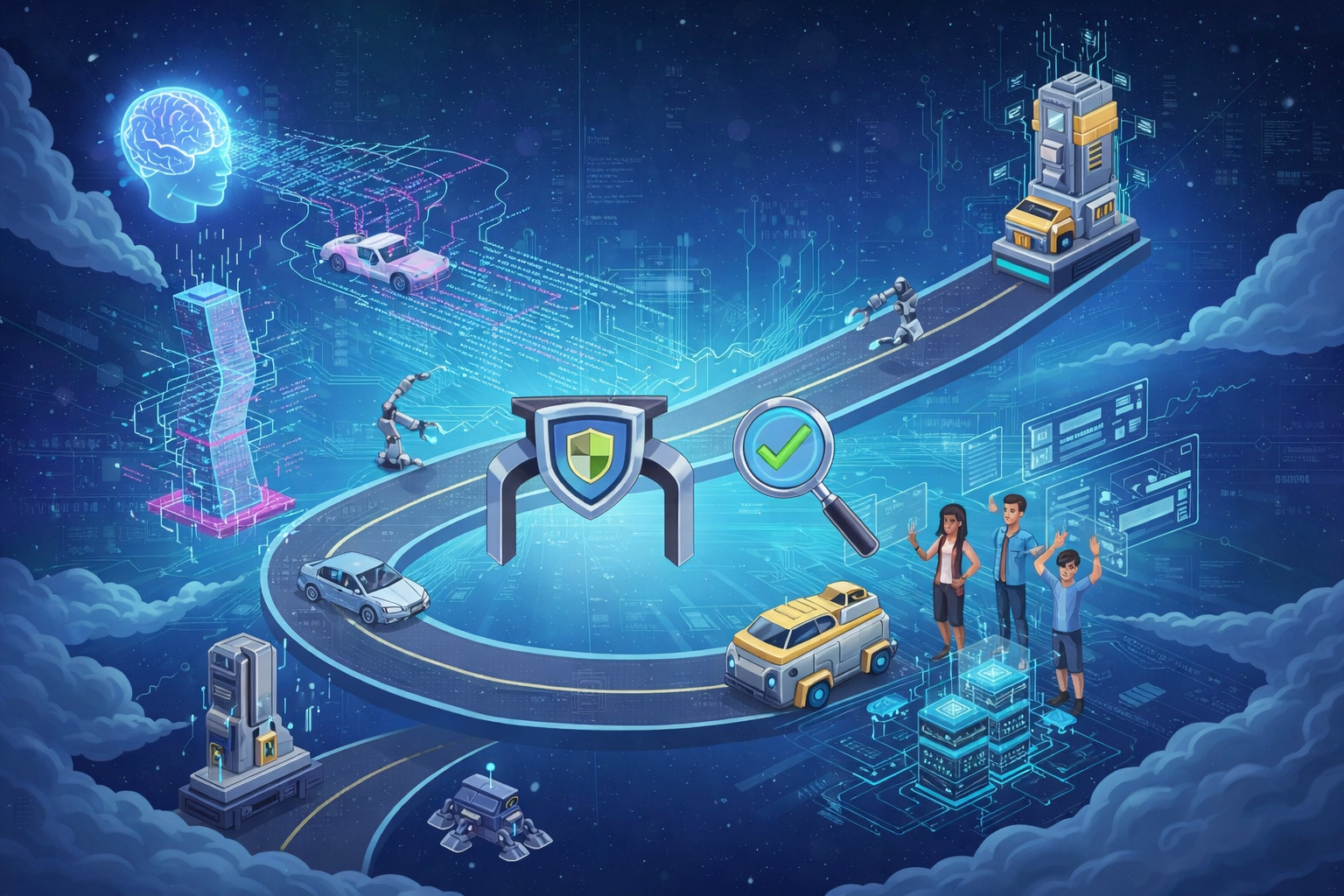
I. Embracing the “Vibe”
Remember the days when AI was confined to the realms of science fiction? Now, it’s not just playing chess; it’s writing our code. There’s a definite buzz, “vibe,” if you will, surrounding the transformative potential of generative AI in software development.
What exactly is “vibe coding?” Coined by Andrej Karpathy in 2025, it’s the concept of simply describing your desired software functionality to an AI and, voila! Functional code emerges. Imagine having a hyper-productive junior developer available on demand.
The promise is enticing: accelerated development cycles, rapid prototyping, and democratized app creation
II. The “Vibe” Takes Hold
The seeds of this revolution were sown in the early 2020s. Prompt engineering emerged as a critical skill, teaching us the art of conversing with AI. Tools like GitHub Copilot and Gemini Code Assist rose to prominence, reshaping developer workflows.
Then came 2025: the shift to outcome over mechanisms. This pure vibe coding approach offered the alluring dream of “forgetting the code exists.” A siren song, perhaps?
III. When the “Vibe” Gets Glitchy
The Maintenance Monster
AI-generated code frequently introduces more technical debt than it resolves. Lower quality, inefficient algorithms, and zero documentation can turn an MVP into a refactoring nightmare.
Scaling Blues
Fragile architectures and inadequate database designs. We re-engineer your application for robust scalability and performance optimization.
The Audit Alarm
Studies suggest 45% of AI code contains vulnerabilities. We employ property-based testing and semantic validation to ensure security.
Integration Headaches
Bridging the gap between vibe coded components and legacy infrastructure requires big-picture context that AI often lacks.
IV. The Smarter Future
The future points towards a collaborative partnership. Imagine AI systems capable of proactively identifying problems, suggesting viable solutions, and even autonomously correcting themselves.
Human developers will evolve towards architectural planning, strategic oversight, and creative problem-solving. This paradigm shift necessitates deep expertise to manage these immensely powerful tools.